
"coffee bean growth"
20000 article(s) found

Overexpansion? Stagnant growth? Starbucks will close 150 stores next year in the hope of China
Professional coffee knowledge exchange more information about coffee beans Please follow the coffee workshop (Wechat official account cafe_style) coffee chain Starbucks announced that it will close 150 stores in the United States in fiscal year 2019. This figure is three times the number of stores closed in previous years. Starbucks is expected to slow in the third quarter of this year. Starbucks currently has about 14000 stores in the United States. The company expects this year

Can coffee trees be planted in the coffee tree planting room? Growth conditions of Coffee trees
Professional coffee knowledge exchange more coffee bean consultation Please follow the coffee workshop (Wechat official account cafe_style) Coffee trees are difficult to grow outside tropical and subtropical climates, but if you have enough indoor and outdoor space or outdoor space as well as a suitable climate, you can plant several coffee trees at home and produce a small number of coffee beans yourself. A coffee tree takes three to five years.

The growth habits of coffee the distribution of coffee the three main types of coffee
Coffee trees grow in national farms in tropical or subtropical regions known as coffee belts centered at the equator and between latitudes of 25 degrees south and north. At present, coffee is produced in more than 60 countries, widely distributed in South America, Central America, the West Indies, Asia, Africa, Arabia, the South Pacific and Oceania. In terms of output, Brazil, which accounts for the first place in the world, accounts for about 30%; the second

The growth process of coffee
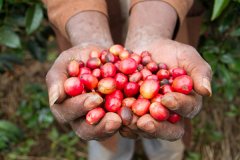
The coffee tree is an evergreen tree with small white flowers and green fruit that does not turn red until it is ripe. A normal coffee tree can usually grow to a height of 5 to 10 meters, but bean farmers often prune it to less than 2 meters for harvest convenience. After flowering, there are many dark green oval fruits, and the mature fruits change from dark green to bright red, due to the color and cherry.

Introduction to the characteristic flavor of four forms of Ethiopian coffee beans grown and produced in Ethiopia coffee
Growth and production patterns: there are four growth production patterns in Ethiopia, and 95% of coffee is produced from these types or systems. 1. Forest grows in southern and southwestern Ethiopia, mostly wild or under natural forests. It provides natural shade for coffee trees, but the resistance is slightly weak. This production system accounts for about
Growth Environment and characteristics of Coffee trees Coffee planting
Coffee gives the public the impression that it is black, bitter and excited after drinking sleepless beverages. The coffee beans we see in the coffee shop are brown, roasted beans and amber. Coffee comes from coffee beans, which are harvested and processed from the fruits of coffee trees. Coffee trees grow at the center of the equator, south.

Boutique coffee beans: the growth process of coffee beans in-depth understanding of the principle of coffee
A coffee tree can harvest 3-5 kg of fruit, and raw coffee beans account for 1. 5% of the fruit quality. Going from fruit to raw coffee beans is really a time-consuming and laborious task. Arabian, Robusta and Librian Arabian coffee account for about 2% of the world's coffee production. The plant is not suitable for high temperature, low temperature, more rain and less rain. Coffee beans are oval flat and have a high height.

The growth process of boutique coffee the mode of production of coffee beans
1. The uniformity and thickness of grinding 2. Water quality and water temperature of extracted coffee 3. Gouache ratio 1. After the coffee beans are ground into powder, the coffee beans are ground into powder, and the thickness is adjusted in the thick word of white sugar, which is close to that of the coffee cup. The uniformity is completely determined by the grinding tool, and the more expensive the better. two。 Water quality and water temperature A normal cup of coffee, strong

What is organic coffee beans?
In many parts of the world, growers use pesticides to control the growth of coffee pests, often at high altitudes where wet, foggy coffee is more susceptible to fungi, so growers often use pesticides. Many people think coffee can be called organic as long as synthetic pesticides, herbicides and chemical fertilizers are not used during its growth. In fact, coffee can only be called organic when third parties (except coffee makers and miners) are used.

Prospects of Jima Coffee Industry in Ethiopia the growth environment of Jima coffee beans
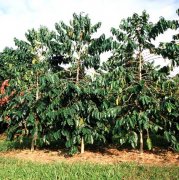
For more information on coffee beans, please follow Coffee Workshop (official Wechat account cafe_style) harvesting Coffee in Southwest Ethiopia. The partner of the Limmu Coffee Farm-the largest modern coffee plantation in Ethiopia-grows coffee in the highlands of southwestern Ethiopia near the town of Jimma. More than 75% of coffee is grown in the shade of trees
Coffee beans and coffee trees types of coffee trees
In general, coffee trees can grow to 4-5 meters high, and even 9-10 meters high. A single coffee tree but in places where coffee is artificially planted, people cut off the branches at the top of the coffee tree when it grows to three meters high, so that the coffee tree does not grow too high, so that it can be picked during harvest. According to the botanical classification, the coffee tree belongs to the domain: eukaryotic domain, Eukaryote realm:

Coffee bean growth process coffee tree, coffee flower, coffee fruit
The coffee tree is an evergreen tree with small white flowers and green fruit that does not turn red until it is ripe. A normal coffee tree can usually grow to a height of 5 to 10 meters, but bean farmers often prune it to less than 2 meters for harvest convenience. After flowering, there are many dark green oval fruits, and the mature fruits change from dark green to bright red, due to the color and cherry.

Coffee carving skills the growth environment and characteristics of coffee trees
Coffee beans are fresh and green coffee raw beans, which are obtained by removing red pulp, peel and silver skin from coffee fruit. The structure of coffee fruit is composed of outer skin, pulp, endocarp, silver skin and seeds. The shape is oval, usually the fruit of coffee is composed of two oval seeds opposite each other, and the other side is flat, so it is called flat bean, but it is also made up of
China's coffee consumption has grown at an annual rate of 20%-much higher than the global growth rate of 2%.
In 2008, Huang Wenguang chose to enter Nankeng Reclamation Coffee Manor in Zhangzhou, Fujian Province, and began to grow local coffee. In his view, coffee is squeezing into the Chinese market, which is dominated by tea culture, and if coffee is to be truly successful in China, there must be a coffee bean that is more suitable for the Chinese population, and a local coffee brand with more Chinese characteristics is needed, on the one hand, the market demand for

What are the requirements of the planting environment for the growth of coffee trees? How long does it take to bear fruit?
Professional coffee knowledge exchange more coffee bean information please pay attention to the coffee workshop (Wechat official account cafe_style) what are the requirements for the growing environment of coffee trees? How long does it take to bear fruit? Although the coffee tree is called a tree, it is actually an evergreen shrub. If it is not trimmed, it can be as high as 3-9 meters. There is a glossy dark green at the top of the leaf and nothing at the bottom of the leaf

Types and characteristics of Coffee trees knowledge about Coffee trees
A single coffee tree but in places where coffee is artificially planted, people cut off the branches at the top of the coffee tree when it grows to three meters high, so that the coffee tree does not grow too high, so that it can be picked during harvest. According to the botanical classification, the coffee tree belongs to the domain: eukaryotic domain, Eukaryote kingdom: plant kingdom, Plantae phylum: angiosperm phylum, Magnoliophyta class.

Coffee knowledge the growth habits of Coffee
Coffee is a kind of drink that gives the public the impression that it is black, bitter, sleepless and excited. The coffee beans we see in the coffee shop are tea-brown, which belongs to roasted coffee beans, while the color of the coffee liquid is amber. Coffee comes from coffee beans, which are harvested and processed from the fruit of trees.] Distribution of coffee: coffee

Australian coffee industry sets off a trend of consolidation strong growth in the retail coffee market
The strong growth of the Australian retail coffee market has spurred major coffee brands to consider asset consolidation, expand their operations and increase their market share, Australia China Finance online reported. According to the report, the overall size of the Australian coffee industry is more than A $4 billion, of which the retail coffee sector is about A $3.2 billion, but there is not a single giant in the market.

Growth environment, characteristics and development status of Robusta coffee beans
The output of Robusta species accounts for 25% 35% of coffee bean production, and its main producing countries are in Indonesia (one of its coffee beans is a kind of coffee beans processed by washing, which is a hybrid between Robusta and Arabica. It is the only kind of coffee beans on the Chinese market that can be used as a single drink), Vietnam, Africa, (Ivory Coast, Nigeria, Angola)

Introduction to the Flavor description and Price growth Environment of Solar Yega Chuefei in Sidamo Province
The sun is complicated. Now the sun technology is becoming more and more mature, but it is always mixed with mixed smell. If you miss in the baking process, there will be a very obvious smell of rust, extremely uncomfortable. So fine sun beans are really hard to buy. The flavor of sun Yega is much more than that of water washing, and the most obvious is the aroma of red wine. If beans and baking are all right, it is simply delicious in the world.